
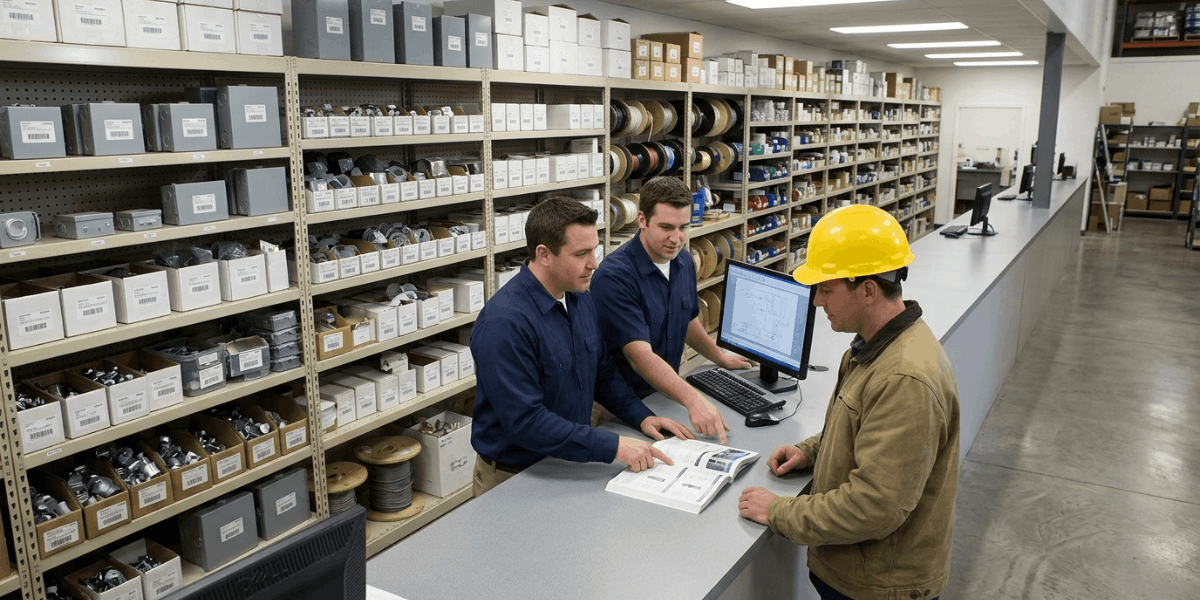
Keeping a plant, warehouse, or commercial property running depends on more than good planning. It depends on having the right electrical parts on hand when equipment starts to fail. The Inland Empire is home to a wide mix of manufacturing, logistics, and industrial operations, and every one of them relies on a dependable source for circuit breakers, motor controls, and panel equipment. A single missing part can stall an entire production line, which is why knowing your options ahead of time matters more than most facility managers realize.
This guide breaks down what an industrial electrical supplier actually does, why this region has such a strong demand for these services, and what separates a good supplier from a great one. By the end, you should have a clear sense of how to evaluate any supplier you are considering.
What Does an Industrial Electrical Supplier Do?
An industrial electrical supplier stocks, sources, and sells the components that keep electrical distribution systems running.
Core Products Carried
- Circuit breakers and hardware kits
- Transformers
- Motor controls and starters
- Panel boards
- Safety switches and fuses
- Used, reconditioned, and salvaged parts for older or discontinued equipment
Part Identification Support
Beyond simply stocking shelves, a strong supplier plays an active role in helping customers identify what they actually need. This might mean reviewing a photo of a damaged part, walking a customer through compatible alternatives, or visiting a job site to confirm the correct component before a purchase is made.
Salvage Buying
Some suppliers also buy electrical salvage. Contractors working on demolition or renovation projects often have leftover panel boards, breakers, and motor control centers. A supplier who purchases this material gives those parts a second life instead of sending them to a landfill.
What Is the Inland Empire Known for Industrially?
The Inland Empire has grown into one of the busiest industrial corridors in Southern California.
Key Industries Driving Demand
Warehousing and logistics dominate much of the landscape, supported by manufacturing plants, distribution centers, and a steady stream of ongoing commercial construction.
· Why This Creates Constant Electrical Demand
This kind of industrial density creates constant demand for electrical infrastructure. A single distribution center might run dozens of motors, conveyor systems, and control panels at once, and any one of those systems can fail without warning. Commercial buildings, municipal facilities, and residential development add even more demand on top of that.
· Why Local Sourcing Matters Here
A region this active cannot depend on slow national shipping for every electrical failure. Businesses need suppliers nearby who understand the equipment already installed across the area and who can respond quickly when something breaks down.
How to Choose an Industrial Electrical Supplier
Not every supplier offers the same level of service. The right choice depends on a handful of factors that matter more once an emergency actually happens.
1. Inventory Depth
A supplier with a shallow inventory can only help with the most common parts. Look for one that carries a genuinely wide range of brands and equipment types, including older or discontinued lines.
2. Response Time
Ask how quickly a supplier can confirm part availability and how fast they can get it into your hands. Same-day service on common parts is a reasonable expectation from a well-stocked local supplier.
3. After-Hours Support
Equipment does not fail on a schedule. A supplier offering a dedicated emergency line outside normal business hours can make the difference between a short delay and an extended shutdown.
4. Ability to Identify Unknown Parts
Older facilities often have equipment with worn or missing labels. A good supplier can help identify a part from a photo or description, saving time compared to guessing and ordering the wrong component.
5. Service and Repair Support
Some suppliers go beyond selling parts and offer to visit a site directly, helping confirm exactly what is needed before a purchase is finalized. This kind of hands-on support reduces costly mistakes.
6. Salvage and Reconditioning Options
Suppliers who recondition used equipment often have access to parts that have been out of production for years. This matters enormously for older buildings and legacy industrial systems.
7. Pricing Transparency
Cost matters, but hidden fees and vague quotes cause more headaches than the price itself.
- A dependable supplier explains pricing upfront for both new and reconditioned parts
- Reconditioned equipment usually costs less than new stock, which helps with tight maintenance budgets
- Request a written quote before making a commitment a purchase
- Confirm warranty terms on reconditioned parts
A supplier who answers these questions clearly, without pressure or delay, is usually one worth building a long-term relationship with.
How Do Electrical Distributors Source Parts?
Sourcing is rarely as simple as pulling an item off a shelf, especially for older or specialized equipment. Most distributors follow a similar process behind the scenes.
- A customer describes the part or sends a photo for identification.
- The supplier checks current inventory for an exact or compatible match.
- If the part is not on hand, the team searches its network of used, reconditioned, or salvaged stock.
- For parts that remain hard to locate, the supplier may reach out to other distributors or manufacturers directly.
- Once confirmed, the part is set aside for pickup, shipped, or delivered depending on urgency.
EDC is one of the best electrical control distributors that pairs new inventory with a salvage and reconditioning network. This combination often makes it possible to locate a part long after the original manufacturer has stopped producing it. Reach out to us today.
What to Look for in an Electrical Supplier
A quick way to evaluate suppliers is to compare how they handle the situations that matter most. The table below outlines what separates a dependable supplier from one that may leave you waiting.
Suppliers that check most or all of these boxes tend to be far more useful during an actual equipment failure, when time and accuracy both matter.
Why Local Expertise Still Matters
National retailers and online marketplaces have their place, but they rarely match the speed or personal attention of a regional supplier who understands the equipment common to this area.
Faster, More Accurate Service
A distributor based in the Inland Empire is more likely to already stock parts for buildings and plants nearby, simply because they see that equipment regularly. That familiarity often means faster diagnosis and fewer wasted trips ordering the wrong component.
Better Access to Older Brands
This local knowledge also extends to older brands. Equipment installed decades ago, such as older Zinsco or Square D lines, is far easier to source through a supplier with established salvage relationships. A national chain without that regional history may simply report the part as unavailable.
Frequently Asked Questions
1. What is the difference between a new and a reconditioned electrical part?
A new part comes directly from the manufacturer with no prior use, while a reconditioned part has been inspected, repaired, and tested to confirm it functions like new. Reconditioned parts often cost less and can be the only option for discontinued equipment.
2. Why do some industrial facilities still use older electrical brands?
Replacing an entire electrical system is expensive and disruptive, so many facilities keep older panels, breakers, and motor controls running for decades. This is exactly why salvage and reconditioning networks remain so valuable across the industry.
3. How quickly should an industrial facility expect a replacement part?
Common parts are often available the same day from a well-stocked local supplier, while rare or obsolete components may take a few days to source through salvage or reconditioned inventory.
4. What industries in the Inland Empire rely most on electrical distribution parts?
Warehousing, logistics, and manufacturing operations make up the bulk of demand, since these facilities depend on continuous power for motors, conveyor systems, and control panels.
5. Is it safe to use reconditioned electrical equipment?
Yes, as long as it has been properly inspected and tested by a qualified supplier. Reputable suppliers verify functionality and safety before reselling any reconditioned part.
Final Thoughts
Choosing the right industrial electrical supplier comes down to more than price. Inventory depth, response time, and the ability to source obsolete parts all affect how quickly a facility gets back up and running after a failure. The Inland Empire’s dense mix of warehousing, manufacturing, and commercial activity makes local sourcing especially valuable, since a nearby supplier already understands the equipment common to this region.
If your facility needs a dependable source for new, used, or reconditioned electrical parts, reach out to EDC. Businesses across the Inland Empire searching for Electric Control & Supply Inc alternatives can count on our team to confirm part availability and get equipment back up and running.