
Summary:
Aluminum branch circuit wiring was common in homes built during the late 1960s and early 1970s. While the wire can conduct electricity safely, its connections may develop problems that increase overheating risks. Identifying aluminum wiring and understanding available repair options can help homeowners determine when they need professional inspection.
Homes built or rewired during the late 1960s and early 1970s may contain aluminum branch circuit wiring. While aluminum itself can safely conduct electricity, its connections can develop problems that increase the risk of overheating.
Understanding aluminum wiring vs. copper wiring safety, how to tell if a house has aluminum wiring, and whether aluminum wiring is dangerous can help homeowners decide when they may need an inspection or repair. This guide covers the fire risk, approved repair methods, and potential cost to replace aluminum wiring.
Why builders used aluminum wiring in the first place
Aluminum wiring entered homes because of a supply problem, not a design breakthrough. Understanding that history explains why the aluminum wiring fire risk older homes face is concentrated in certain construction years.
The copper shortage
The U.S. Consumer Product Safety Commission (CPSC) explains that a copper shortage in the mid-1960s led builders to extend aluminum wire beyond a few large circuits, such as those for clothes dryers and ranges, into general-purpose 15- and 20 amp circuits. That decision placed aluminum in the branch circuits that power everyday outlets and lights.
What regulators know and do not know
CPSC notes that its national survey covered only wire connections at outlets and developed no information about aluminum-wired homes built after 1972. That limit is worth remembering. It means the guidance is strongest for homes from the peak years of aluminum use.
Aluminum Wiring Vs Copper Wiring Safety: Key Differences
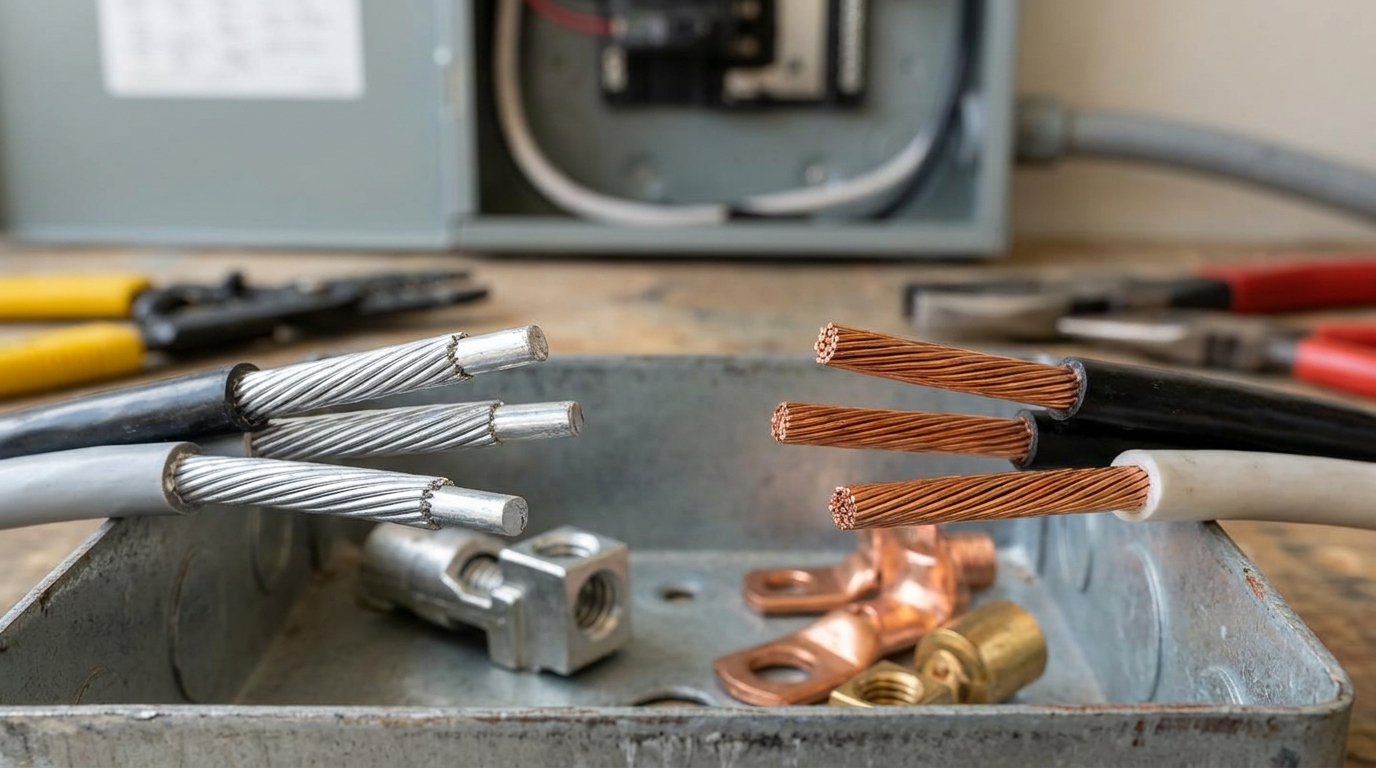
Copper and aluminum can both conduct electricity, but they behave differently at electrical connections. Copper is generally more stable at terminations, while aluminum connections can become more susceptible to increased resistance and overheating as they age.
Aluminum also expands and contracts more with temperature changes than copper. It can also oxidize more readily, which can contribute to connection problems when terminations are not properly installed or maintained.
Cu or copper markings typically identify copper wiring, while Al or Aluminum markings may appear on aluminum cable’s outer jacket. The main safety concern with older aluminum branch wiring is the condition of its connections rather than the aluminum conductor itself.
Checking Your Home For Aluminum Wiring
A few simple observations can point you in the right direction, and an electrician can confirm the rest. Stay safe by looking only at exposed cable and never touching live parts.
Check the age of your home
Start with the build date and any renovation dates. Homes built before 1965 are unlikely to have aluminum branch circuits, while homes or additions from 1965 through the mid-1970s may.
Read the cable jacket
Builders typically installed aluminum wiring as plastic-sheathed cable with no obvious difference from copper cable. Look at the printed or embossed markings on the jacket in an unfinished basement, attic, or garage, and use a flashlight at a low angle if needed. Manufacturers mark aluminum cable Al or Aluminum every few feet, while the marking CU-clad or Copper-clad means copper-coated aluminum wire that the CPSC repair recommendations do not cover.
Watch for trouble signs
CPSC lists hot faceplates on receptacles or switches, flickering lights, circuits that do not work, and the smell of burning plastic at outlets or switches as signs of electrical problems. If you notice any of these, have a licensed electrician find the cause rather than trying to fix it yourself.
Ask a licensed electrician
If you suspect aluminum wiring but cannot confirm it, a licensed electrician can identify the wire type and inspect the connections. A professional can also tell you which repair method fits your home. This step gives you a clear picture before you spend money.
Repair options recommended by the CPSC
CPSC recommends a permanent repair for unremediated aluminum wiring, and it will only endorse methods that are safe, effective, and permanent. CPSC approves three methods.
| Method | What it involves | CPSC position |
| Complete replacement with copper | New copper branch circuits, with old aluminum abandoned in the walls | The best method available, though often impractical or expensive |
| COPALUM crimp pigtails | Short copper pigtails joined to the aluminum with a special connector and tool at every connection. | Safe and permanent, and installed only by electricians trained by the manufacturer |
| AlumiConn connectors | Copper pigtails joined with a set-screw connector at every connection | Next best option when COPALUM is not available |
Planning an aluminum wiring repair and gathering connectors, devices, and cable? Contact EDC and ask about parts through Electric Control & Supply Inc., so each component matches your chosen repair method.
What it costs to fix aluminum wiring
The cost to replace aluminum wiring varies based on home size, wiring accessibility, repair method, labor rates, and the amount of electrical work required. National rewiring estimates can provide general context, but aluminum-specific repair costs vary significantly by location and project requirements.
For example, a 2026 Portland contractor guide estimates $3,500 to $7,000 for COPALUM, $4,000 to $8,000 for AlumiConn pigtailing, and$12,000 to $25,000 for a full copper rewire. The same source estimates an additional 15% to 25% for drywall repair. These are Portland-area estimates, so actual costs can differ substantially based on location, home size, accessibility, and project complexity.
Because aluminum wiring repairs require different approaches, homeowners should obtain a project-specific estimate from a qualified electrician rather than relying on a single national price range.
Frequently Asked Questions
Is aluminum wiring illegal?
Existing aluminum branch circuit wiring is generally not illegal, and a home is not usually in code violation just for having it. Local rules and insurers may still set their own requirements, so check with both.
Can I leave aluminum wiring alone if it seems fine?
CPSC says failing aluminum connections seldom give warning signs, and it recommends a permanent repair for unremediated aluminum wiring. An inspection is a sensible first step.
Does CU-clad marking mean my wiring is aluminum?
CU-clad or Copper-clad means copper-coated aluminum wire. CPSC states that its repair recommendations do not cover it, so ask an electrician to assess your situation.
Are twist-on wire connectors an acceptable repair?
CPSC does not consider twist-on connectors a permanent repair, and testing showed many of them overheating severely. Use them only as an emergency, temporary measure.
Is aluminum service entrance cable a problem?
CPSC guidance covers branch circuit wiring. Larger gauge aluminum used in service entrance cables, dryers, and ranges falls outside those repair recommendations, and an electrician can evaluate it separately.
Is aluminum wiring dangerous?
Aluminum wiring is not automatically dangerous, but aging or faulty connections can overheat and create a fire risk. A licensed electrician can inspect the wiring and recommend appropriate repairs.
How to tell if a house has aluminum wiring?
Check the cable markings in accessible areas such as an attic, basement, or garage. Markings such as “Al” or “Aluminum” can indicate aluminum wiring, but a licensed electrician should confirm the wiring type.
Conclusion
Aluminum wiring is not automatically dangerous, but aging connections can increase the risk of overheating. Checking cable markings and having a licensed electrician inspect suspected aluminum wiring can help identify problems early.
Speak with the team at EDC, one of the electrical control distributors who can supply the connectors and devices your repair calls for. The right connectors, sized and rated for your chosen repair method, keep resistance from building where aluminum meets copper.
